
The Haunting Narratives: Exploring Henry James’ Ghost Stories
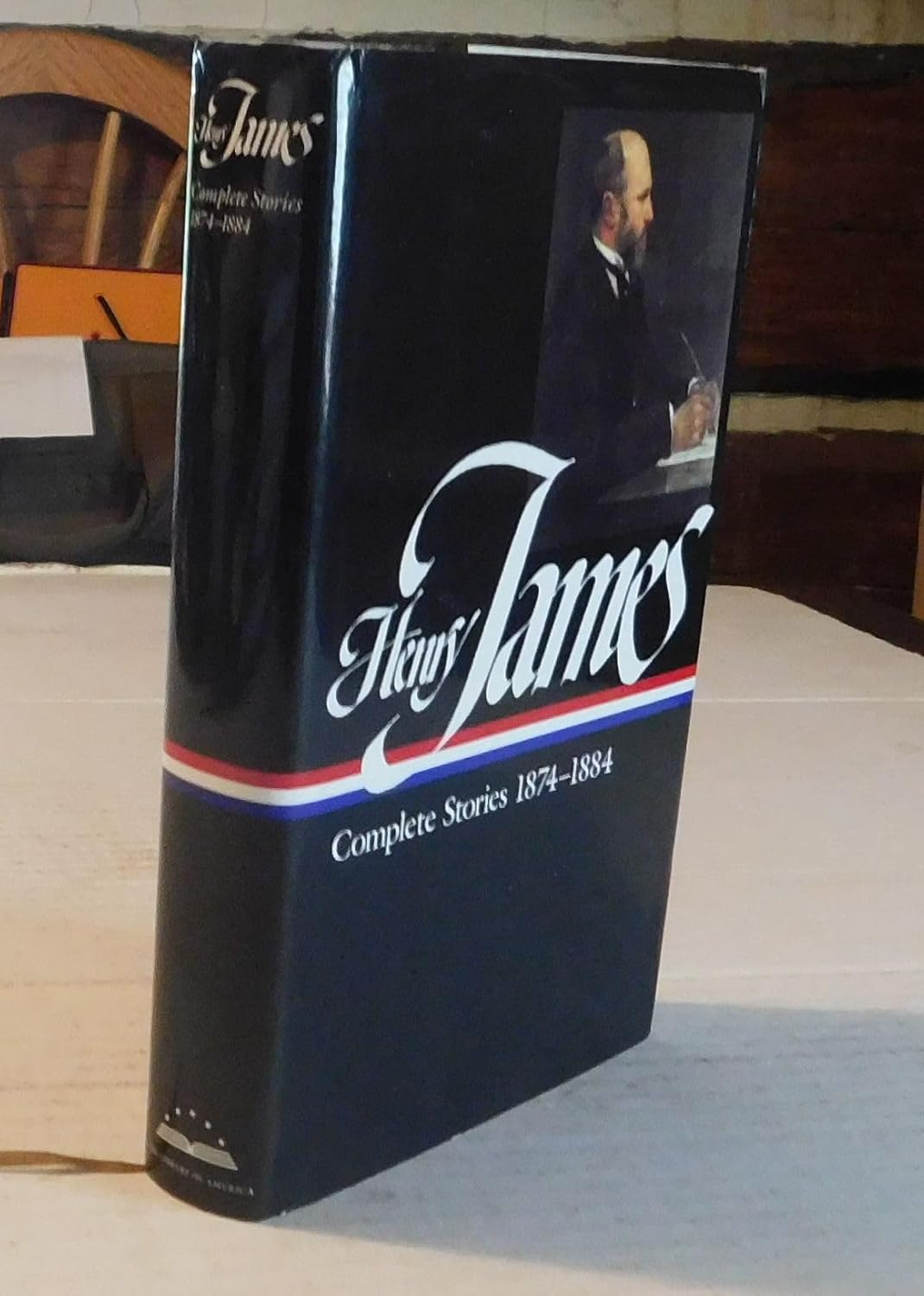
The spectral realm, in its chilling ability to mirror our deepest anxieties and unresolved desires, has long been a fertile ground for literary exploration. Among the masters who navigated these shadowed landscapes, Henry James stands as a colossus. His ghost stories, far from being mere tales of rattling chains and spectral apparitions, delve into the psychological intricacies of the human condition, leaving an indelible mark on the genre and continuing to haunt readers centuries later. This article will explore the unique qualities of James’s haunted narratives, examining their thematic depth, stylistic innovations, and enduring relevance in English literature.
A Different Kind of Haunting: The Psychological Core
What distinguishes Henry James’s ghost stories from more conventional gothic fare is their profound psychological undercurrent. James eschewed overt supernatural manifestations in favor of a subtler, more insidious form of haunting. The ghosts, when they appear, are often less about physical presence and more about the lingering weight of the past, the spectral echoes of unspoken truths, and the pervasive influence of guilt, desire, and moral compromise.
The Innocents and the Corrupted: A Recurring Motif
A central theme in James’s ghost stories is the confrontation between innocence and corruption, often embodied by children. In “The Turn of the Screw,” arguably his most famous and debated ghost story, two orphaned charges, Miles and Flora, become the focal points of a governess’s escalating terror. The ambiguity of whether the ghosts are real or figments of the governess’s tormented psyche is precisely what lends the story its enduring power. The spectral figures of Peter Quint and Miss Jessel are not just malevolent entities; they represent a lost innocence and a pervasive sensuality that threatens to consume the children. The governess’s desperate attempts to protect them, while potentially leading to their destruction, highlight the terrifying thin line between salvation and damnation.
This motif of corrupted innocence is echoed in other works. In “The Private Life,” the enigmatic spirit of a celebrated artist, Claude Estre, is suggested to be so absorbed in his creative endeavors that he has effectively shed his corporeal existence. His “haunting” of his former friend, an unnamed narrator, is less about spectral terror and more about the chilling realization of a life lived entirely within the confines of art, devoid of genuine human connection. The ghostly presence, in this instance, is a testament to the potential for art itself to become a form of haunting, consuming the artist and leaving a void in its wake.
The Unreliable Narrator and the Shifting Sands of Perception
James’s masterful use of unreliable narration is intrinsically linked to his approach to the supernatural. The reader is often placed in the precarious position of experiencing the narrative through the lens of a character whose perceptions are colored by their own biases, neuroses, or psychological fragility. This forces the reader to actively participate in constructing meaning, questioning the very nature of reality presented to them.
In “The Turn of the Screw,” the governess’s intense psychological state and her desire to be seen as a heroic protector make her an inherently unreliable narrator. Her interpretations of events, her descriptions of the children’s behavior, and her encounters with the spectral figures are filtered through her own anxieties and perhaps a burgeoning madness. This creates a palpable sense of unease, as the reader grapples with the possibility that the horror resides not in external forces, but within the governess’s own mind. This technique, deeply rooted in psychological realism, anticipates the narrative complexities found in much of 20th and 21st-century fiction.
Stylistic Innovations: The Jamesian Pen and the Unseen
Henry James’s prose is as distinctive as his thematic concerns. His intricate sentence structures, his nuanced vocabulary, and his meticulous attention to detail contribute to the atmospheric and psychologically charged nature of his ghost stories. He often builds suspense through suggestion and implication rather than explicit description, allowing the reader’s imagination to fill in the terrifying gaps.
The Power of Implication and Subtext

James rarely spells out the supernatural. Instead, he hints at it, allowing the reader to infer the presence of the uncanny. This creates a more potent and lasting sense of dread. For example, in “The Jolly Corner,” Spencer Brydon returns to his ancestral home in New York after years abroad, only to be haunted by the spectral presence of the man he might have become – a man of immense business acumen and ruthlessness. The “ghost” is not a traditional specter, but a palpable manifestation of Brydon’s unrealized potential and his anxieties about his own character. The horror lies in the chilling realization of a bifurcated self, the unspoken life that haunts the present.
His descriptions are often imbued with a subtle eeriness. Instead of describing a ghost with glowing eyes, James might focus on a chill in the air, a peculiar shadow, or a disquieting silence. These sensory details, artfully woven into the narrative, create a pervasive atmosphere of unease that is far more effective than any overt supernatural event. This technique demonstrates that the true terror often lies not in what is seen, but in what is felt and suspected.
Dialogue as a Breeding Ground for the Uncanny
James’s characters often engage in lengthy, circuitous conversations. This dialogue, while sometimes challenging for modern readers, is crucial in revealing their inner states and the subtle tensions that underpin their relationships. The unspoken, the things left unsaid, are often more terrifying than any explicit declaration. The spaces between the words, the pregnant pauses, and the evasive answers create a sense of lurking dread and unresolved conflict.
In “The Real Thing,” while not a ghost story in the traditional sense, the premise itself is subtly haunting. The narrator, an artist struggling to capture the essence of the aristocracy, hires real aristocrats as models, only to find them incapable of embodying the very social graces they possess. The “ghost” here is the absence of authenticity, the haunting realization that true art cannot be manufactured. The conversations between the narrator and his aristocratic models, filled with politeness and subtle condescension, underscore this profound disconnect, creating a chilling commentary on class and artifice.
Enduring Relevance: Why James’s Ghosts Still Haunt Us
Despite being written in a different era, Henry James’s ghost stories resonate deeply with contemporary audiences. Their enduring appeal can be attributed to their timeless exploration of universal human experiences and their sophisticated narrative techniques.
The Unfinished Business of the Past
The core of James’s haunted narratives lies in the idea that the past, with its unresolved issues, moral failures, and unfulfilled desires, can exert a powerful influence on the present. This concept of “unfinished business” is a universally understood phenomenon, making his stories relatable across generations.
A statistical study of literary analysis of ghost stories reveals a consistent trend: the most impactful narratives often tap into anxieties about loss, memory, and the consequences of our actions. James’s works, by focusing on the psychological repercussions of these themes, tap into a fundamental human fear: that our past selves, or the specters of our choices, will inevitably catch up to us.
A Mirror to Our Own Inner Turmoil
James’s ghost stories function as mirrors, reflecting our own inner turmoil, our own unspoken fears, and our own moral quandaries. The ambiguity in his narratives forces readers to confront their own interpretations and biases, making the experience of reading his work deeply personal and often unsettling.
Consider the ongoing critical debate surrounding “The Turn of the Screw.” The fact that readers and critics have been dissecting the governess’s sanity and the nature of the hauntings for over a century is a testament to the story’s ability to provoke thought and introspection. This continuous engagement signifies the story’s enduring power to make us question our own perceptions and the boundaries of our own understanding.
The Art of Suggestion in a Sensory Overload World

In an era saturated with visual stimuli and explicit content, the subtle, suggestive power of James’s prose offers a welcome counterpoint. His ability to evoke fear through atmosphere and implication is a masterful technique that encourages readers to engage their imaginations, a skill that is perhaps more valuable than ever.
The modern reader, accustomed to jump scares and overt displays of the supernatural in film and television, might find James’s approach more cerebral. However, it is precisely this cerebral quality that allows his stories to linger long after the book is closed. The questions they raise, the ambiguities they present, and the psychological unease they cultivate are far more haunting than any fleeting visual spectacle.
The Lingering Echoes of James’s Phantoms

Henry James’s ghost stories are not simply tales of the supernatural; they are profound explorations of the human psyche, the lingering power of the past, and the elusive nature of reality. Through his intricate prose, his masterful use of unreliable narration, and his focus on psychological depth, James created narratives that continue to haunt and captivate readers. His phantoms, born not of rattling chains but of unspoken desires, unresolved guilt, and the specters of what might have been, offer a timeless and chilling commentary on the human condition. The enduring power of his haunted narratives lies in their ability to probe the unseen architects of our lives, leaving us to grapple with the lingering echoes of their presence long after the final page is turned.


