
How to Choose the Right Self-Adhesive Foam Board for Your Needs
In the world of crafting, display, and presentation, self-adhesive foam board stands out as a versatile and remarkably user-friendly material. Its lightweight nature, rigidity, and pre-applied adhesive backing make it an ideal choice for a myriad of applications, from mounting artwork and creating trade show displays to prototyping and architectural models. However, with the growing popularity of this material, the market now offers a diverse range of options. Navigating this landscape to find the *perfect* self-adhesive foam board for your specific needs can be a daunting task. This comprehensive guide will equip you with the knowledge and insights to make an informed decision, ensuring your projects are executed with precision and professionalism.
Understanding the Fundamentals: What is Self-Adhesive Foam Board?
Before delving into the selection process, it’s crucial to understand what constitutes self-adhesive foam board. At its core, it’s a lightweight but rigid sheet material composed of a foamed polystyrene core sandwiched between two facings. These facings are typically made of paper, cardstock, or sometimes a more durable plastic film. The defining characteristic, of course, is the integrated pressure-sensitive adhesive layer applied to one or both sides of the board. This adhesive is protected by a release liner, which is peeled away to expose the sticky surface for mounting your chosen materials.
The advantages of self-adhesive foam board are numerous:
- Ease of Use: The pre-applied adhesive eliminates the need for separate glues, sprays, or messy application processes, saving time and effort.
- Clean Finish: It often results in a smoother, more uniform bond compared to hand-applied adhesives, reducing the risk of air bubbles or wrinkles.
- Lightweight: Despite its rigidity, it’s exceptionally light, making it easy to transport, handle, and hang.
- Cost-Effective: For many applications, it offers a good balance of performance and affordability.
- Versatility: It can be easily cut, shaped, and mounted, adapting to a wide range of project requirements.
Key Factors to Consider When Choosing Self-Adhesive Foam Board
The “right” self-adhesive foam board is not a one-size-fits-all solution. Several critical factors will influence your choice. By carefully evaluating these aspects, you can ensure optimal performance and longevity for your projects.
1. Core Material and Thickness

The core of the foam board is typically made of polystyrene. However, variations exist in density and manufacturing techniques, which can affect its rigidity and durability. Thickness is another crucial determinant of strength and application suitability.
Polystyrene Foam Cores:
Most self-adhesive foam boards utilize expanded polystyrene (EPS) or extruded polystyrene (XPS) foam. EPS is more common and generally more affordable, while XPS offers slightly higher density and moisture resistance, though this difference is often minimal in standard foam boards.
Thickness Options:
Self-adhesive foam boards come in a range of thicknesses, commonly:
- 3mm (1/8 inch): Lightweight and economical, suitable for temporary displays, indoor signage, and craft projects where extreme durability isn’t paramount.
- 5mm (3/16 inch): A good all-around choice offering a balance of rigidity and lightweight properties. Excellent for presentations, mounting photos, and small-scale models.
- 10mm (3/8 inch): Provides significantly more rigidity and strength, ideal for larger displays, freestanding signs, and applications requiring greater structural integrity.
- Greater than 10mm: Less common in self-adhesive varieties but available for specialized applications demanding exceptional strength.
Case Study: Trade Show Booth Design. A small business owner creating a portable trade show booth needed a lightweight yet sturdy material for their graphic panels. They opted for 5mm thick self-adhesive foam board, finding it provided sufficient rigidity to hold large printed graphics without bowing, while remaining easy to transport and set up. Thicker boards would have added unnecessary weight and cost.
2. Facing Material
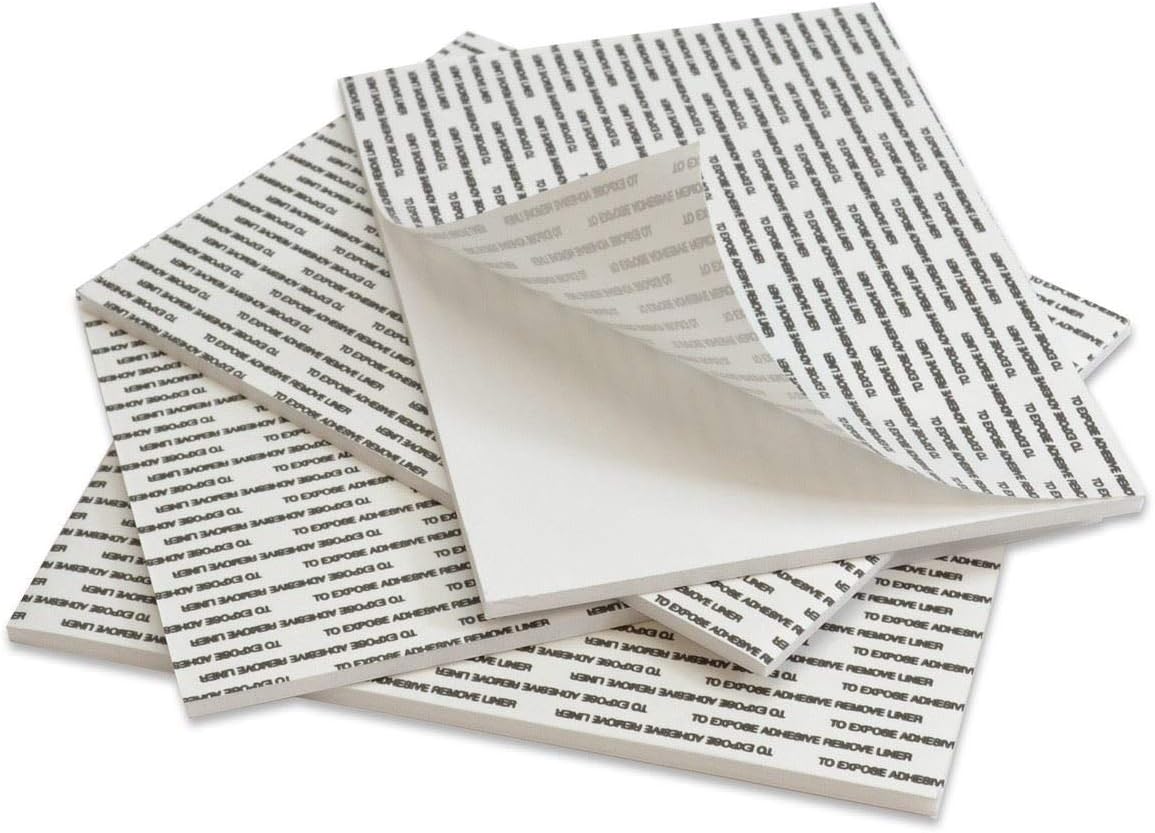
The material covering the foam core plays a significant role in the board’s appearance, durability, and how well it accepts inks and adhesives. The most common facing materials are:
Paper-Faced Boards:
These are the most prevalent and cost-effective. The paper can range from a standard smooth white to textured finishes. They are excellent for printing, mounting photographs, and general graphic applications. However, paper can be susceptible to moisture and damage if not handled with care.
Cardstock-Faced Boards:
Often providing a slightly more robust and smoother surface than standard paper, cardstock facings offer better print quality and a more premium feel. They are a good choice for high-impact presentations and displays where a refined finish is desired.
Plastic-Faced Boards (e.g., PVC):
These offer superior durability, moisture resistance, and often a glossy or matte finish. Plastic-faced boards are ideal for outdoor or high-traffic environments where the board may be exposed to elements or frequent handling. They can be more expensive but offer a longer lifespan.
3. Adhesive Type and Strength
The adhesive is the star of the show in self-adhesive foam board. Understanding its properties is paramount to ensuring a successful and lasting bond.
Permanent vs. Removable Adhesives:
- Permanent Adhesive: Designed for long-term bonding. Once applied, it’s very difficult to remove without damaging the mounted material or the foam board itself. This is ideal for permanent displays, artwork mounting, and applications where repositioning is not intended.
- Removable/Repositionable Adhesive: Allows for the mounted material to be peeled off and repositioned multiple times without significant loss of adhesion or damage. This is invaluable for prototyping, temporary signage, and situations where adjustments are likely.
Tack Level:
The “tack” refers to the initial stickiness of the adhesive. Some adhesives have a high tack, meaning they grab immediately upon contact, while others have a lower tack, allowing for more manipulation before a strong bond is formed. Consider the weight and type of material you will be mounting. Heavier items may benefit from a higher tack, while delicate materials might require a lower tack to prevent tearing.
Acid-Free Adhesives:
For archival purposes, such as mounting photographs, artwork, or important documents, it is crucial to select foam board with acid-free adhesives. Standard adhesives can degrade over time, releasing acids that can yellow, stain, or damage the mounted item. Reputable manufacturers will clearly label their products as acid-free for archival use.
Statistic: A survey by the Professional Photographers of America found that over 60% of photographers consider the longevity and archival quality of mounting materials a critical factor in client satisfaction.
4. Size and Shape Availability
Self-adhesive foam boards are available in a standard range of sheet sizes, typically similar to standard poster or art paper sizes (e.g., 20×30 inches, 30×40 inches, 40×60 inches). Custom sizes might be available from specialized suppliers. Consider the dimensions of your project and choose a board size that minimizes waste and the need for multiple joins.
5. Durability and Environmental Considerations

While foam board is generally lightweight, its durability can vary. For high-traffic areas or applications exposed to potential damage, consider the robustness of the facing material and the overall construction. Some manufacturers are also offering more environmentally friendly options, such as boards made from recycled content or those with more sustainable manufacturing processes. If environmental impact is a concern, research brands that prioritize sustainability.
Navigating Different Applications: Choosing the Best Board for Your Project
The optimal self-adhesive foam board choice is heavily influenced by its intended application. Here are some common scenarios and recommendations:
For Photography and Artwork Mounting:
- Key Features: Acid-free adhesive, smooth, lint-free facing, archival quality.
- Recommendation: Opt for acid-free, white paper or cardstock-faced foam board with a permanent adhesive. Ensure the board itself is free from optical brighteners that can affect color reproduction.
- Example: A photographer mounting a limited edition print for an exhibition would prioritize acid-free boards to ensure the longevity of their work.
For Presentations and School Projects:
- Key Features: Lightweight, easy to cut, good rigidity, variety of colors (sometimes).
- Recommendation: 3mm or 5mm thick paper-faced foam board is usually sufficient. Permanent adhesive is generally suitable, but removable can be useful for iterative designs.
- Example: Students creating science fair displays or business professionals preparing visual aids for a presentation often use standard self-adhesive foam boards for their ease of use and cost-effectiveness.
For Signage and Displays (Indoor):
- Key Features: Rigidity, good print surface, durability.
- Recommendation: For larger or more permanent indoor signs, 5mm or 10mm thick boards with robust paper or cardstock facings are ideal. Consider permanent adhesives for longevity.
- Example: Retail stores mounting promotional posters or directional signage in-store would benefit from the rigidity and clean finish of self-adhesive foam board.
For Prototyping and Model Making:

- Key Features: Ease of repositioning, clean cuts, lightweight.
- Recommendation: Removable or repositionable adhesive is highly recommended for prototyping, allowing for adjustments and iterations. A lighter thickness (3mm or 5mm) is often preferred.
- Example: Industrial designers or architects working on preliminary models might use self-adhesive foam board with repositionable adhesive to test different configurations without damaging their components.
For Trade Shows and Events:
- Key Features: Lightweight for transport, rigidity for larger panels, durability.
- Recommendation: 5mm or 10mm thick boards are common, depending on the size of the display panels. Consider the ease of setup and takedown.
- Example: A company exhibiting at a large trade show might use custom-printed graphics mounted on self-adhesive foam board for their booths, balancing visual impact with logistical practicality.
Tips for Optimal Use and Application
Once you’ve selected the right self-adhesive foam board, follow these tips for a successful application:
- Clean Surfaces: Ensure both the foam board and the material you are mounting are clean, dust-free, and dry.
- Work in a Clean Environment: Minimize dust and debris in your workspace to prevent them from getting trapped under the adhesive.
- Peel the Liner Gradually: For larger items, peel the release liner back incrementally while carefully aligning your material. Avoid peeling the entire liner at once, as this can lead to misalignments and air bubbles.
- Use a Roller or Squeegee: After positioning your material, use a soft roller or squeegee to firmly press down from the center outwards, ensuring even adhesion and expelling any trapped air.
- Trim with Caution: Use a sharp craft knife and a metal ruler for clean, precise cuts. Practice on scrap pieces if you are new to cutting foam board.
- Store Properly: Keep unused foam boards flat in a cool, dry place away from direct sunlight and extreme temperatures to maintain the integrity of the adhesive.
Your Blueprint for Success

Choosing the right self-adhesive foam board is a critical step towards achieving professional and lasting results in your creative and presentation endeavors. By understanding the fundamental components – core material, thickness, facing, and adhesive properties – and considering the specific demands of your project, you can confidently select the ideal material. Whether you’re a seasoned professional or a budding enthusiast, this guide has provided you with the essential knowledge to navigate the diverse options available. Remember to prioritize acid-free options for archival applications, consider the durability required for your environment, and always aim for clean, precise application techniques. With the right self-adhesive foam board in hand and these insights in mind, you are well-equipped to bring your projects to life with confidence and excellence.


