The Evolution of Bodyboards: A Look at Design and Technology
The humble bodyboard, often perceived as a simpler cousin to the surfboard, has undergone a remarkable evolution since its inception. From its rudimentary beginnings as a pool toy to its current status as a sophisticated piece of watersports equipment, the bodyboard’s trajectory is a testament to human ingenuity and the relentless pursuit of wave-riding perfection. This article will delve into the fascinating history of bodyboard design and technology, exploring the innovations that have transformed this accessible craft into a performance-driven machine.
From Pool Toy to Ocean Conqueror: The Genesis of the Bodyboard
The roots of the bodyboard can be traced back to the 1970s, a period of burgeoning interest in watersports. While casual wave riding had always existed, the formalized creation of the bodyboard is largely attributed to Tom Morey. Morey, a surfer and engineer, sought to create a board that was easier to paddle, more buoyant, and offered a different riding experience. His initial creations were essentially sliced-down surfboards made from foam. However, it was his development of the “Morey Boogie” in 1973 that truly marked the birth of the modern bodyboard.
Morey’s early boards were crafted from polyethylene foam, often covered in a plastic sheeting for durability. The design was simple: a flat, rectangular shape with a slightly rounded nose and tail. The primary objective was buoyancy and stability, allowing riders to catch waves with relative ease without the need for extensive paddling or standing. These early models were instrumental in democratizing wave riding, opening up the ocean to a wider audience who might have found traditional surfing intimidating or physically demanding.
The Material Revolution: From Polyethylene to Advanced Foams
One of the most significant advancements in bodyboard evolution has been the shift in materials. The initial polyethylene foam, while buoyant, lacked the stiffness and responsiveness required for more dynamic maneuvers. This led to the exploration of new foam cores that could offer better performance:
- EPS (Expanded Polystyrene) Foam: This lightweight and buoyant foam became a staple in early bodyboard construction. It provided a good balance of flotation and affordability, making bodyboards accessible. However, EPS can be prone to compression and delamination under heavy use.
- Polypropylene (PP) Foam: Introduced later, PP foam offered a significant upgrade in terms of stiffness and responsiveness. This allowed riders to generate more speed and perform more aggressive turns. PP foam also exhibits better water resistance and durability compared to early EPS.
- Extruded Polystyrene (XPS) Foam: Some manufacturers have experimented with XPS, which offers a denser and more rigid core. While providing excellent stiffness, it can sometimes feel heavier and less forgiving than PP.
- Composite Cores: The pinnacle of modern bodyboard core technology involves composite materials. These often combine different types of foam with reinforcing agents like carbon fiber or fiberglass. This allows for a highly engineered core that can be precisely tuned for flex, stiffness, and overall performance, offering the best of all worlds.
The transition from softer, more pliable foams to denser, more responsive cores directly impacted the riding style and capabilities of bodyboarders. Riders could now carve harder, generate more speed, and execute aerial maneuvers with greater control.
Shaping the Wave Rider: Design Innovations in the Hull and Deck

Beyond the core material, the shape of the bodyboard itself has undergone continuous refinement. What began as a simple rectangle has evolved into a sophisticated hull designed to interact optimally with the water:
The Bottom Contour: Channels and Concaves

Early bodyboards had flat bottoms. However, designers quickly realized the potential for hydrodynamic improvements. The introduction of bottom contours, such as channels and concaves, revolutionized how bodyboards interacted with the water:
- Channels: These longitudinal grooves on the bottom of the board help to channel water flow, improving grip and stability, especially during turns and when riding fast. They prevent the board from sliding out uncontrollably.
- Concaves: These scooped-out sections on the bottom of the board can create suction and lift, similar to a hydrofoil. This can enhance speed and control, particularly in steeper waves.
The placement, depth, and number of these channels and concaves are meticulously engineered by board designers to suit different wave conditions and riding styles. For example, boards designed for prone riding might have deeper, more pronounced channels for maximum grip, while boards intended for stand-up bodyboarding might feature more subtle contours.
Deck Contours and Grips
The rider’s connection to the board is crucial for control. Deck design has also evolved significantly:
- Deck Contours: Subtle curves and channels on the deck provide ergonomic comfort and help the rider maintain position. These can include features like knee wells or hip grips.
- Deck Grips: Originally, riders might have used wax or even duct tape for grip. Modern bodyboards often feature textured deck pads made from materials like EVA foam, offering superior traction and cushioning. Some high-performance boards incorporate strategically placed grip dots or patterns.
The development of the “slick skin” or “hard slick” bottom, a smooth, low-friction material, was another game-changer. This allows the board to glide effortlessly through the water, increasing speed and maneuverability.
Riding Styles and Board Configurations: A Diverse Landscape
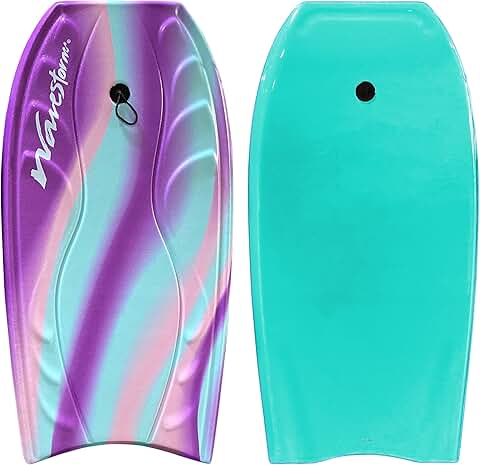
The evolution of bodyboards isn’t just about materials and hull shapes; it’s also about catering to a diverse range of riding styles. This has led to different board configurations:
- Prone Bodyboards: These are the most common type, designed for riders who lie down on their stomachs. They typically range from 36 to 44 inches in length and are characterized by their buoyancy and stability.
- Stand-up Bodyboards (Boogies): While the term “boogie board” is often used generically, it originally referred to Morey’s creation. Stand-up bodyboards are shorter and wider, allowing riders to stand up for a brief period, mimicking aspects of surfing. They require more skill and balance.
- Drop Knee Bodyboards: These boards are designed for a specific stance where one knee is on the deck while the other is bent, allowing for a more surf-like turning radius. These boards are often slightly longer and narrower than traditional prone boards.
The design of each type of bodyboard is optimized for its intended riding style. For example, drop-knee boards might have more pronounced rails and a flatter rocker to facilitate carving.
Technological Advancements Beyond the Board: Fins and Accessories
The evolution of the bodyboard isn’t solely confined to the board itself. The development of accompanying equipment has been equally crucial:
Bodyboard Fins: The Propulsion Powerhouse
Bodyboard fins, or flippers, are indispensable for propulsion. Their design has moved from basic rubber fins to highly engineered hydrodynamic tools:
- Blade Design: Modern fins feature precisely shaped blades with varying stiffness and stiffness distribution to maximize thrust and minimize drag.
- Foot Pocket: The comfort and fit of the foot pocket are paramount for efficient power transfer and preventing blisters.
- Material Innovations: High-performance fins utilize advanced materials like thermoplastic rubber and composite blends for enhanced flexibility, durability, and propulsion.
The synergy between the bodyboard and the fins is essential for high-performance wave riding. The right fin can transform a rider’s ability to catch waves, maintain speed, and execute maneuvers.
Leashes: Safety and Connection

Leashes are a critical safety feature, ensuring that the rider stays connected to their board. Evolution in leashes has focused on:
- Strap Comfort: Padded ankle or wrist straps prevent chafing and discomfort.
- Cord Strength and Elasticity: Strong, durable cords with controlled elasticity absorb the shock of wipeouts, preventing the board from being ripped from the rider’s grasp.
- Swivels: High-quality swivels prevent the leash from tangling.
The development of the “rail saver” system, which attaches the leash to the board’s rail rather than the stringer, further enhanced durability and reduced the risk of board damage.
Case Study: The Rise of Performance Bodyboarding
The evolution of bodyboarding is vividly illustrated by the rise of professional bodyboarding. Competitions like the World Bodyboard Association (WBA) Tour showcase incredible athleticism and technical skill. Riders like Mike Stewart, Dave Ward, and Guilherme Tâmega have pushed the boundaries of what’s possible on a bodyboard, performing complex aerials, barrel rides, and advanced maneuvers. This evolution has been driven by:
- Board Manufacturers: Companies like Stealth, NMD, VS, and Hubboards continuously innovate, producing boards with cutting-edge cores, contours, and rail designs specifically for elite athletes.
- Rider Feedback: Professional riders provide invaluable feedback to designers, influencing the direction of future board development.
- Media and Exposure: The visibility of professional bodyboarding through films and competitions inspires new generations of riders and fuels demand for high-performance equipment.
The statistics of progression are evident in competition scores and the complexity of maneuvers now considered commonplace.
The Future of Bodyboarding: Sustainable Materials and Enhanced Performance
The journey of the bodyboard is far from over. The future promises further advancements driven by:
- Sustainable Materials: With a growing environmental consciousness, there’s a push towards using recycled and bio-based materials in bodyboard construction without compromising performance.
- Advanced Hydrodynamics: Continued research into fluid dynamics will likely lead to even more sophisticated bottom contours and rail designs.
- Personalization and Customization: Technology might allow for more personalized board designs tailored to individual rider preferences and wave conditions.
- Integration of Smart Technology: While speculative, the integration of sensors to track performance metrics could offer new insights for riders and designers.
The evolution of the bodyboard is a dynamic process, mirroring the broader trends in watersports technology. It’s a story of how a simple idea, driven by a passion for riding waves, can transform into a sophisticated piece of equipment that offers exhilarating experiences to millions worldwide.
A Wave of Innovation
The evolution of the bodyboard from its humble beginnings as a buoyant toy to a high-performance craft is a compelling narrative of design and technological advancement. The continuous refinement of core materials, the meticulous sculpting of hull contours, and the development of complementary accessories like fins and leashes have all contributed to its remarkable transformation. Bodyboarding, once seen as a passive pastime, is now a dynamic and skillful pursuit, thanks to the relentless innovation of designers and the dedication of riders who push its boundaries. As we look to the future, the ongoing quest for sustainable materials and enhanced performance ensures that the bodyboard will continue to ride the crest of innovation for years to come.


