
How to Care for and Maintain Your Cassette Tape Player Boombox
In an era dominated by digital streams and instant access, there’s a certain nostalgic allure to the warm, analog sound of a cassette tape. And what better way to experience this sonic journey than through the iconic boombox? These portable titans of sound, once ubiquitous at block parties and beach outings, are experiencing a resurgence in popularity. However, like any cherished piece of vintage technology, a boombox requires mindful care and regular maintenance to ensure it continues to deliver its distinctive charm for years to come. This article delves deep into the art and science of keeping your cassette tape player boombox in optimal working condition, offering practical advice and insights for both casual listeners and dedicated enthusiasts.
The Enduring Appeal of the Boombox: More Than Just a Gadget
Before we dive into the nitty-gritty of maintenance, it’s worth understanding why the boombox holds such a special place in our collective memory. Emerging in the late 1970s and exploding in popularity throughout the 1980s and early 1990s, boomboxes were more than just portable music players. They were statements of style, symbols of urban culture, and essential companions for social gatherings. Their robust design, impressive volume, and the tactile experience of popping in a cassette tape offered a unique form of engagement with music.
Consider the cultural impact: the boombox was central to the rise of hip-hop, its beats echoing from street corners and parks. For many, it represented freedom, independence, and the power of music to unite people. Today, vintage boomboxes are sought after by collectors and music lovers alike, not just for their sound but for the tangible connection they offer to a bygone era. A study by the Museum of Modern Art in 2017 highlighted the boombox as an icon of 20th-century design and popular culture, underscoring its enduring significance.
Understanding Your Boombox: The Anatomy of a Cassette Player
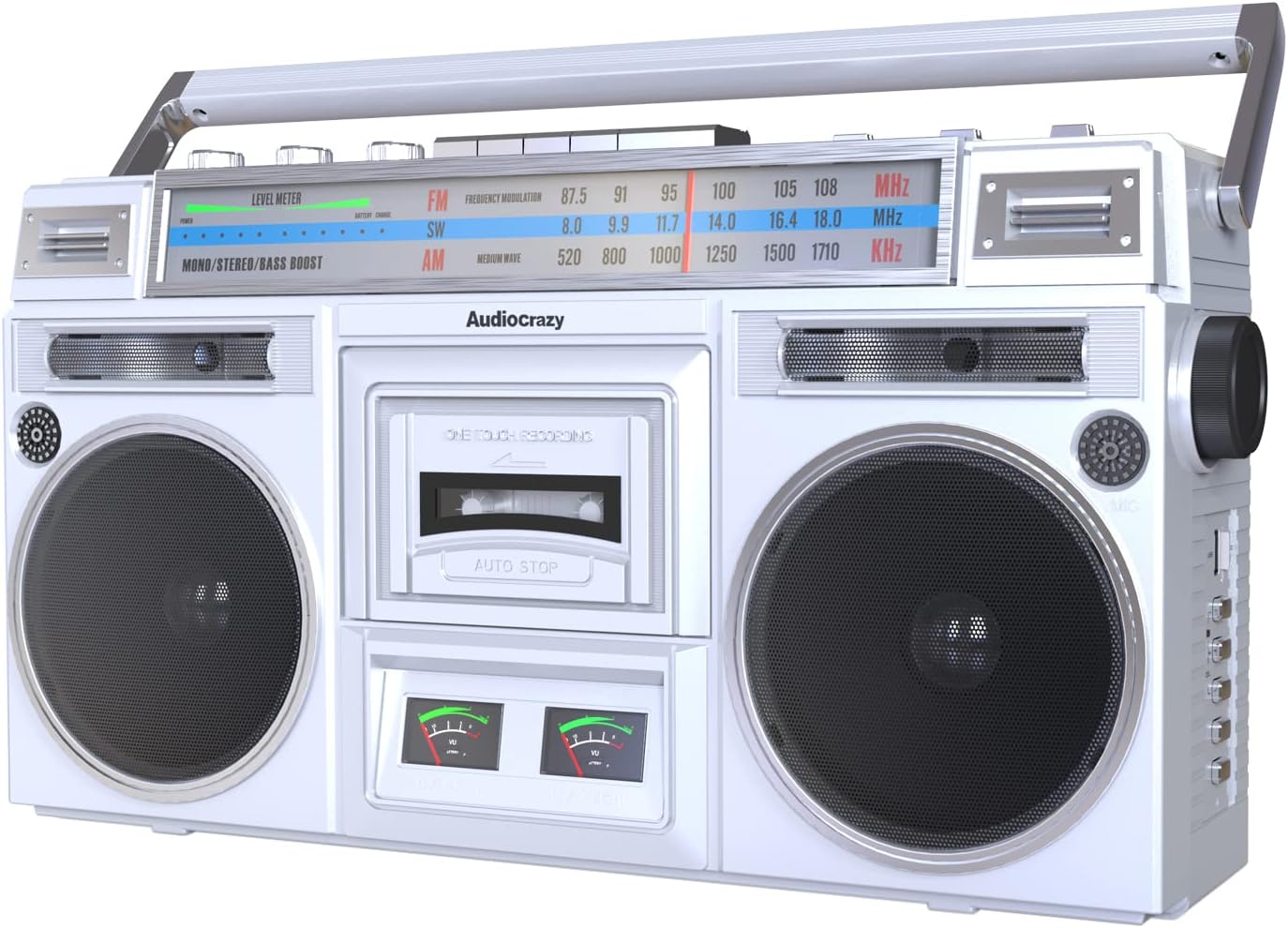
To effectively care for your boombox, a basic understanding of its components is essential. While designs vary, most cassette tape player boomboxes share a common architecture:
- Cassette Deck: This is the heart of the player, housing the tape transport mechanism, playback/record heads, and the motor that drives the reels.
- Radio Tuner: Typically AM/FM, this component allows you to tune into radio broadcasts.
- Amplifier and Speakers: These work together to boost the audio signal and project sound.
- Power Supply: Boomboxes usually have both AC power input for mains operation and a battery compartment for portability.
- Controls: Buttons and knobs for play, pause, stop, rewind, fast forward, record, volume, tuning, and EQ.
Essential Maintenance for the Cassette Deck: Preserving the Sound
The cassette deck is the most delicate and maintenance-intensive part of your boombox. Neglecting it can lead to distorted sound, tape jamming, and even permanent damage to your precious tapes.
Cleaning the Playback and Record Heads: The First Line of Defense

The playback and record heads are the small metal protrusions that come into direct contact with the magnetic tape. Over time, they accumulate a build-up of dust, dirt, and oxide shedding from the tapes, which can significantly degrade audio quality. This is arguably the most crucial maintenance task.
- Materials Needed:
- Isopropyl alcohol (90% or higher is ideal)
- Cotton swabs (lint-free preferred)
- Soft, lint-free cloth
- Optional: Cassette head cleaning tape (use sparingly)
- Cleaning Process:
- Power Off: Ensure the boombox is unplugged or the batteries are removed to prevent accidental activation.
- Access the Heads: Open the cassette door. You should be able to see the capstan (a metal spindle) and the heads (small metal surfaces, usually two or three).
- Dampen the Swab: Lightly dampen a cotton swab with isopropyl alcohol. Do not soak it.
- Gentle Cleaning: Gently rub the heads in a back-and-forth motion. You should see a dark residue on the swab. Repeat with fresh swabs until no more residue appears.
- Clean the Pinch Rollers: While you’re there, gently clean the pinch rollers (rubber wheels that press the tape against the capstan). These can also accumulate residue.
- Allow to Dry: Let the heads and rollers air dry completely before closing the cassette door and powering on the unit.
Example: A common issue is muffled sound or loss of high frequencies. This is almost always due to dirty heads. Regularly cleaning them, perhaps after every 20-30 hours of playback, can prevent this and prolong the life of your tapes.
Maintaining the Capstan and Pinch Rollers: Ensuring Smooth Tape Movement
The capstan and pinch rollers are responsible for guiding the tape smoothly past the heads. If they are dirty or worn, it can lead to tape speed fluctuations, wow and flutter (unpleasant pitch variations), and even tape stretching or creasing.
- Cleaning: As mentioned above, use isopropyl alcohol and cotton swabs.
- Inspection: Check the pinch rollers for signs of wear, such as hardening, cracking, or flat spots. If they appear damaged, they may need to be replaced. This can be a more complex repair, often requiring a qualified technician.
Lubrication: Keeping Things Moving Smoothly
The intricate mechanisms within the cassette deck require lubrication. Over time, the factory lubricant can dry out or become gummy, causing increased friction and strain on the motor.
- Where to Lubricate: Key areas include the motor shaft, the take-up and supply spindles, and any visible gears.
- What to Use: Use a light-duty synthetic lubricant or a specialized white lithium grease. Avoid heavy oils, as they can attract dust and gum up the works.
- How to Lubricate: Apply a very small amount to moving parts. Too much lubricant will attract dirt and can cause more problems than it solves.
Case Study: A user reported their boombox’s cassette player would intermittently stop and start. After cleaning the heads and rollers, the issue persisted. Upon closer inspection, it was found that the take-up spindle was sticking due to dried lubricant. A tiny application of synthetic oil resolved the problem.
Belt Replacement: The Unsung Hero of Tape Transport
Many boomboxes use rubber belts to drive the tape transport mechanisms. These belts are prone to degradation over time. They can become stretched, brittle, or sticky, leading to a host of playback issues.
- Signs of Belt Failure:
- Cassette player not working at all (no motor sound).
- Slow or inconsistent tape speed.
- Tape not winding properly.
- Slipping sounds.
- Replacement: This is a common repair for boomboxes. You’ll need to identify the correct belt size and type for your specific model. Many online retailers sell replacement belt kits for vintage electronics. Replacing belts often involves disassembling parts of the cassette deck, so proceed with caution and consult your boombox’s service manual if available.
Statistic: According to a survey of vintage electronics repair shops, worn or broken belts are the most frequent cause of cassette player malfunctions, accounting for an estimated 60% of all issues.
Beyond the Cassette Deck: Caring for Other Boombox Components

While the cassette deck demands the most attention, other parts of your boombox also benefit from regular care.
Radio Tuner: Maintaining Signal Clarity
The radio tuner relies on antennas and internal circuitry to pick up signals.
- Antenna Care: Ensure the telescopic antenna is fully extended and free of damage. Gently wipe it down with a damp cloth to remove dust.
- Internal Cleaning: The tuning capacitors can accumulate dust. A quick blast of compressed air (used from a safe distance) can help. For deeper cleaning, a contact cleaner spray can be used on the tuning mechanism, but exercise caution and follow product instructions.
Speakers: Ensuring Sound Integrity
The speakers are responsible for reproducing the audio. Protect them from physical damage and environmental factors.
- Dust and Debris: Gently vacuum speaker grilles or use a soft brush to remove dust. Avoid excessive pressure.
- Water and Moisture: Keep your boombox away from direct moisture, as it can damage speaker cones and internal electronics.
- Physical Damage: Be mindful of dropping or knocking the boombox, as this can easily tear or puncture speaker cones.
Power Supply: A Stable Foundation
Whether using AC power or batteries, a stable power source is crucial.
- AC Adapter: If your boombox uses an external AC adapter, ensure the cable is not frayed or damaged. Use only the correct voltage and amperage adapter specified by the manufacturer.
- Battery Compartment: Periodically check the battery contacts for corrosion. If you see any white or greenish powdery substance, clean it gently with a pencil eraser or a cotton swab dipped in a vinegar-water solution. Ensure batteries are removed when the boombox is not in use for extended periods to prevent leakage.
Troubleshooting Common Boombox Problems

Even with diligent care, you might encounter some issues. Here are a few common problems and their potential solutions:
- No sound from speakers:
- Check volume control.
- Ensure headphones are not plugged in.
- Test with both radio and cassette.
- Inspect speaker connections (if accessible).
- Cassette tape plays too slow or fast:
- Clean heads, capstan, and pinch rollers.
- Check or replace drive belts.
- Ensure tape is not sticking.
- Radio reception is poor:
- Extend and adjust antenna.
- Try tuning to different stations or locations.
- Check for internal antenna connections.
- Tape gets jammed:
- Never force a jammed tape.
- Carefully open the cassette door.
- Gently try to free the tape by hand, checking for snags on heads or rollers.
- If severely tangled, the tape may be lost.
When to Seek Professional Help

While many maintenance tasks can be performed at home, some issues require the expertise of a professional electronics technician. If you encounter any of the following, it’s best to consult a specialist:
- Complex internal repairs beyond belt replacement.
- Damaged internal wiring or circuit boards.
- Issues with the main logic board or integrated circuits.
- Persistent problems that you cannot diagnose.
The cost of a professional repair can vary, but for a beloved and functional boombox, it can be a worthwhile investment.
Caring for your cassette tape player boombox is a labor of love, an act of preservation that allows you to continue enjoying a unique and cherished audio experience. By understanding your boombox’s components and implementing a regular maintenance routine, you can ensure its longevity and keep the rhythm alive. From the meticulous cleaning of playback heads to the occasional replacement of drive belts, each step contributes to the vibrant, warm sound that defines the boombox era. In a world of ephemeral digital data, the tangible, hands-on experience of maintaining and enjoying your boombox offers a profound connection to the past and a delightful auditory escape for the present. So, dust off your favorite tapes, power up your boombox, and let the analog magic transport you.


